

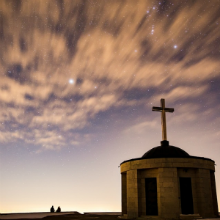



하나님은 침묵, 우리의 반응
1. 배경 – 시편 9편과 10편은 하나의 흐름입니다
오늘 우리가 살펴볼 시편 10편은
시편 9편과 이어진 하나의 시입니다.
이 두 시편은 히브리어 알파벳 순서를 따라
각 절의 첫 글자를 맞추어 지은 시로,
원래 하나의 흐름 속에서 이해해야 합니다.
시편 9편에서는
하나님은 공의를 행하시는 왕이시며
악인을 심판하시고 의인을 보호하시는 분이라고 선포합니다.
그러나 시편 10편으로 넘어오면
현실은 전혀 다르게 보입니다.
하나님의 공의가
보이지 않는 것처럼 느껴집니다.
그래서 시인은 질문합니다.
왜 하나님은 침묵하시는 것입니까.
이제 우리는 이 질문 앞에서
신자가 어떻게 반응해야 하는지를 살펴보고자 합니다.
2. 시인의 불평 – 왜 하나님은 침묵하시는 것입니까
시인은 악인의 형통과 불의를 보며 하나님께 불평합니다.
겉으로 보기에 그의 길은 항상 형통합니다.
주의 심판은 너무 높아서 그에게 보이지 않는 것처럼 보입니다(시편 10편 5절).
그래서 그는 마음속으로 말합니다.
“나는 결코 흔들리지 아니하리라.
나는 대대로 역경을 당하지 아니하리라”(시편 10편 6절).
그의 입은 저주와 속임과 사기로 가득하며
“그의 혀 밑에는 해악과 악독이 있나이다”(시편 10편 7절).
그의 행동은 더욱 악합니다.
“그가 마을의 숨는 곳에 앉으며
은밀한 곳에서 죄 없는 자를 죽이고
그의 눈은 가난한 자를 향해 엿보고 있나이다”(시편 10편 8절).
“사자가 자기 굴에서 숨어 기다리는 것 같이
그가 가난한 자를 잡으려고 숨어 기다리며
자기 그물에 끌어들여 그를 잡나이다”(시편 10편 9절).
“그가 몸을 구부리고 자기를 낮추는 것은
자기의 강한 것들로 가난한 자를 넘어지게 하려 함이니이다”(시편 10편 10절).
이 모든 행동의 뿌리에는
그의 확신이 자리 잡고 있습니다.
“하나님이 잊으셨고
그의 얼굴을 가리셨으니
결코 보지 아니하시리라”(시편 10편 11절).
하나님의 침묵을
하나님의 부재로 착각한 것입니다.
3. 시인의 간구 – 하나님의 적극적인 개입을 요청합니다
그러나 시인은 불평에서 멈추지 않습니다.
하나님께 나아가 간구합니다.
“여호와여 일어나소서”(시편 10편 12절).
이 ‘일어나소서’는 히브리어 "쿠마(קוּמָה)"로
단순히 자리에서 일어나는 의미를 넘어,
하나님께서 대적을 물리치고
자기 백성을 구원하시기 위해
전사처럼 즉각적으로 행동을 개시하시는 모습을 담고 있습니다.
즉 시인은
지금 당장 일어나셔서
역사해 주시기를 요청하고 있는 것입니다.
“하나님이여 주의 손을 드소서
겸손한 자를 잊지 마옵소서”(시편 10편 12절).
손을 든다는 것은
하나님의 능력과 개입을 의미합니다.
또한 시인은 말합니다.
“악인을 꺾으소서
그의 악을 찾아내사
더 이상 찾지 못할 때까지 하소서”(시편 10편 15절).
이는 단순한 처벌이 아니라
악을 끝까지 추적하여 제거해 달라는 요청입니다.
시인은 하나님의 개입을
강하게, 적극적으로 요청합니다.
4. 시인의 확신 – 기도 가운데 마음이 정리됩니다
시인의 상황은 여전히 변하지 않았습니다.
그러나 기도 가운데
그의 시선이 바뀌기 시작합니다.
그리고 그는 고백합니다.
“여호와께서는 영원무궁토록 왕이시니이다”(시편 10편 16절).
또한 그는 확신합니다.
하나님은 겸손한 자의 소원을 들으시며
아버지 없는 자와 학대받는 자를 위해 공의를 행하시는 분이십니다
(시편 10편 17–18절).
상황이 해결되어서가 아니라
기도 가운데 확신이 회복된 것입니다.
5. 우리의 적용 – 우리는 어떻게 해야 합니까
우리도 동일한 질문을 던질 때가 있습니다.
왜 하나님은 침묵하시는 것입니까.
그때 우리는
세상을 당장 바꾸려 하기보다
먼저 하나님 앞에 나아가야 합니다.
억울함을 숨기지 말고
있는 그대로 하나님께 토로해야 합니다.
그리고 하나님께 요청해야 합니다.
지금 일해 주시기를
개입해 주시기를 간구해야 합니다.
그렇게 기도하는 가운데
우리의 시선이 바뀌고
우리의 마음이 정리되며
하나님에 대한 확신이 다시 세워집니다.
결국 우리는
세상을 바꾸는 사람이 아니라
하나님 앞에 서는 사람입니다.
하나님 앞에 우리의 억울함을 쏟아내고
그분의 개입을 구하며
기도 가운데 확신을 붙드는 것이 필요합니다.
그때 우리는 알게 됩니다.
하나님은 침묵하시는 분이 아니라
지금도 보고 계시며
반드시 공의를 이루시는 분이십니다.
묵상 질문
-
나는 어떤 상황에서 하나님이 침묵하신다고 느끼고 있습니까
-
나는 억울함과 분노를 하나님께 솔직하게 가지고 나아가고 있습니까
아니면 내 안에만 쌓아두고 있습니까 -
나는 하나님께 구체적으로 무엇을 요청하고 있습니까
정말 하나님의 개입을 기대하며 기도하고 있습니까 -
지금 내 상황은 변하지 않았더라도
하나님에 대한 확신은 분명하게 붙들고 있습니까 -
나는 세상을 바꾸려 애쓰고 있습니까
아니면 하나님 앞에 서는 사람으로 살아가고 있습니까
1. Background – Psalm 9 and Psalm 10 Form One Unified Psalm
The Psalm 10 that we are examining today is connected to Psalm 9 as one unified composition.
These two psalms follow the order of the Hebrew alphabet,
with each verse beginning with successive letters,
indicating that they are meant to be understood as a single literary unit.
In Psalm 9,
God is declared as a righteous King
who judges the wicked and defends the righteous.
However, as we move into Psalm 10,
the reality appears very different.
God’s justice
seems invisible.
So the psalmist asks:
Why does God seem silent?
We will now follow the psalmist’s perspective
and consider how a believer should respond
in the face of God’s apparent silence.
2. The Psalmist’s Complaint – Why Does God Seem Silent?
The psalmist observes the prosperity of the wicked
and brings his complaint before God.
“His ways are always grievous;
thy judgments are far above out of his sight:
as for all his enemies, he puffeth at them” (Psalm 10:5, KJV).
Thus he says in his heart:
“I shall not be moved:
for I shall never be in adversity” (Psalm 10:6, KJV).
“His mouth is full of cursing and deceit and fraud:
under his tongue is mischief and vanity” (Psalm 10:7, KJV).
His actions are even more evil:
“He sitteth in the lurking places of the villages:
in the secret places doth he murder the innocent:
his eyes are privily set against the poor” (Psalm 10:8, KJV).
“He lieth in wait secretly as a lion in his den:
he lieth in wait to catch the poor:
he doth catch the poor, when he draweth him into his net” (Psalm 10:9, KJV).
“He croucheth, and humbleth himself,
that the poor may fall by his strong ones” (Psalm 10:10, KJV).
At the root of all this behavior
is his inner conviction:
“He hath said in his heart,
God hath forgotten:
he hideth his face;
he will never see it” (Psalm 10:11, KJV).
He mistakes God’s silence
for God’s absence.
3. The Psalmist’s Petition – A Call for God’s Active Intervention
Yet the psalmist does not remain in complaint.
He turns to God in prayer.
“Arise, O LORD; O God, lift up thine hand:
forget not the humble” (Psalm 10:12, KJV).
The word “Arise” comes from the Hebrew qumah (קוּמָה).
It does not simply mean to stand up,
but carries the sense of God rising as a warrior—
taking immediate action
to defeat His enemies
and deliver His people.
The psalmist is not asking for passive presence,
but for decisive intervention.
He continues:
“Break thou the arm of the wicked and the evil man:
seek out his wickedness till thou find none” (Psalm 10:15, KJV).
This is not merely a request for punishment,
but a plea for the complete removal of evil.
The psalmist boldly calls
for God’s active involvement.
4. The Psalmist’s Confidence – His Heart Is Settled in Prayer
The psalmist’s situation has not changed.
But in prayer,
his perspective begins to shift.
And he confesses:
“The LORD is King for ever and ever:
the heathen are perished out of his land” (Psalm 10:16, KJV).
He also declares with confidence:
“LORD, thou hast heard the desire of the humble:
thou wilt prepare their heart,
thou wilt cause thine ear to hear:
To judge the fatherless and the oppressed,
that the man of the earth may no more oppress”
(Psalm 10:17–18, KJV).
His confidence is not rooted in changed circumstances,
but in a renewed assurance through prayer.
5. Our Application – How Should We Respond?
We too ask the same question:
Why does God seem silent?
In such moments,
we are not called to fix the world first,
but to come before God.
We must not hide our frustration,
but bring it honestly before Him.
We must ask—
for God to act,
for God to intervene.
And in prayer,
our perspective changes,
our hearts are settled,
and our confidence in God is restored.
In the end,
we are not the ones who change the world,
but the ones who stand before God.
We pour out our burdens before Him,
seek His intervention,
and hold fast to faith through prayer.
Then we come to realize:
God is not silent.
He sees,
and He will surely bring justice.
Reflection Questions
-
In what situations do I feel that God is silent?
-
Am I honestly bringing my frustration and injustice before God,
or am I keeping it within myself? -
What am I specifically asking God to do?
Am I truly expecting His intervention? -
Even if my situation has not changed,
do I still hold firmly to my confidence in God? -
Am I trying to change the world on my own,
or am I living as one who stands before God?